
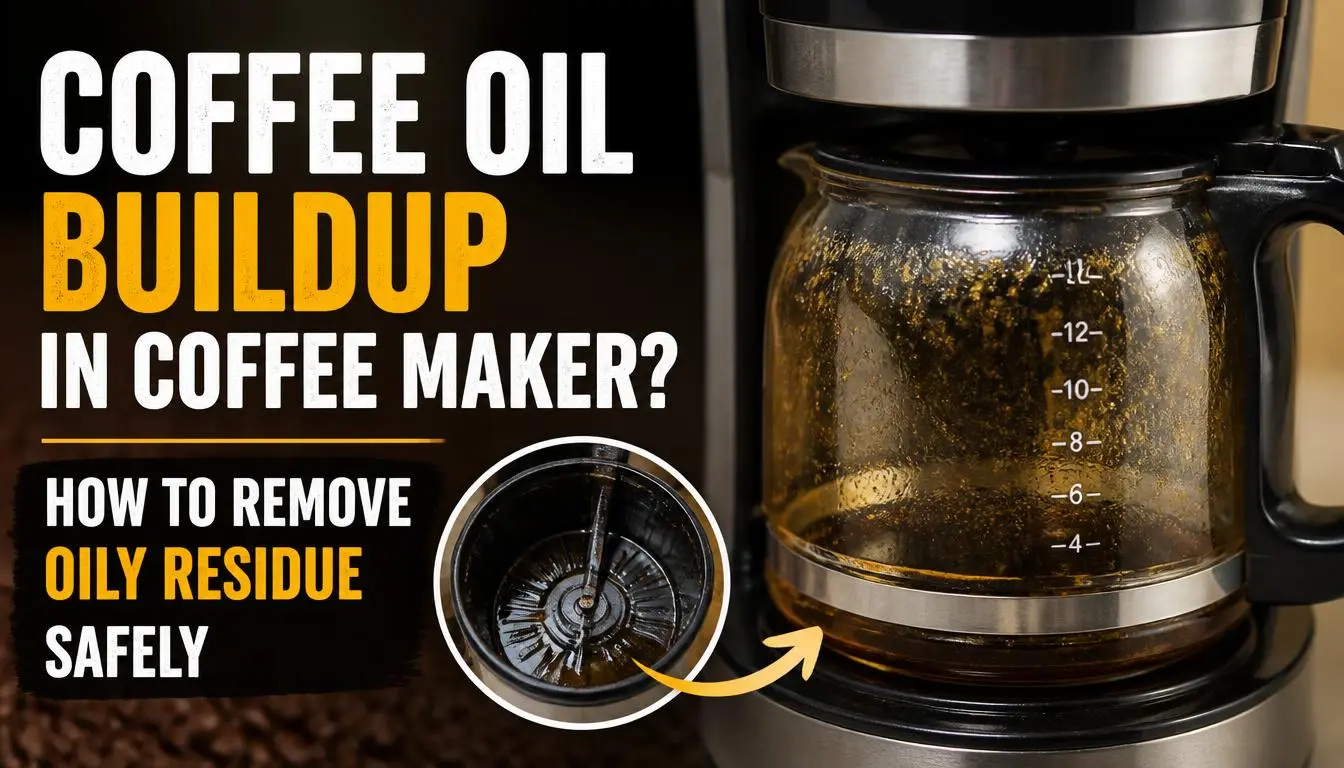
Quick Answer: Coffee oil buildup in a coffee maker happens when natural oils from coffee beans collect on the carafe, filter basket, reusable filter, and other coffee-contact parts. To remove the oily residue, turn off and unplug the machine, let it cool, wash removable parts with warm water and mild dish soap, and use a soft brush where needed. For internal coffee pathways, follow the cleaning instructions for your specific machine. Remember that removing coffee oils and descaling are two different tasks.
Have you noticed a greasy film inside your coffee pot, sticky brown residue around the filter basket, or an unpleasant taste in your morning coffee? These problems can happen when coffee oils and leftover grounds build up over time.
The good news is that you can often remove this residue with a simple cleaning routine. You do not always need an expensive cleaner, but stubborn buildup inside an espresso machine or automatic coffee maker may require an approved cleaning product.
In this guide, you will learn what causes coffee oil buildup, how to remove it safely, which cleaners work best, and how to prevent the problem from returning.
What Causes Coffee Oil Buildup in a Coffee Maker?

Coffee beans contain natural oils that help give coffee its aroma, body, and flavor. During brewing, some of these oils move into your cup. Others remain on the surfaces that come into contact with the coffee.
When you do not clean these surfaces regularly, leftover oils can mix with coffee particles and dry into a greasy or sticky film.
Here are the most common causes.
1. Natural Oils From Coffee Beans
Coffee oils are a normal part of brewing. However, repeated use can leave residue on the carafe, filter basket, and reusable filter.
Over time, this residue may become harder to remove with a quick rinse alone.
2. Using Dark-Roast Coffee Beans
Dark-roast beans often have a visibly oily surface. This does not mean the beans are bad, but they may leave more noticeable residue on brewing equipment.
If you enjoy dark-roast coffee, make sure you clean the parts that touch the coffee after use.
3. Skipping Regular Cleaning
Leaving used grounds in the filter basket or old coffee in the carafe gives residue more time to dry and stick to the surfaces.
A quick rinse may remove loose grounds, but it may not remove all the oil. Washing the removable parts with warm, soapy water is usually more effective.
4. Using a Reusable Coffee Filter
Reusable metal filters have small holes or mesh surfaces where coffee oils and fine particles can collect.
If the filter is not cleaned properly, a greasy layer may develop around the mesh. This can also make the filter look stained or dirty, even after a basic rinse.
5. Neglecting the Coffee Maker’s Internal Parts
Some automatic coffee makers and espresso machines have internal brewing components that collect coffee residue.
These areas may require a specific cleaning cycle or a compatible coffee machine cleaning product. Do not assume that washing the carafe will clean the entire machine.
Signs of Coffee Oil Buildup in a Coffee Maker
Not all coffee residue looks the same. Look for these common signs to decide whether your machine needs cleaning.
A Greasy Film Inside the Coffee Pot
A thin, slippery layer may appear on the inside walls of a glass or stainless-steel carafe. It may become more noticeable near the coffee line or around the lid.
Sticky Brown Residue in the Filter Basket
The filter basket may develop a dark, sticky coating where wet grounds sit during brewing. This residue can be difficult to remove with water alone.
Bitter or Stale-Tasting Coffee
Old coffee residue may affect the flavor of a fresh brew. If your coffee tastes stale or unpleasant, cleaning the carafe and filter basket is a sensible first step.
However, bitter coffee can also result from the beans, grind size, brewing temperature, or extraction time. Cleaning will not solve every flavor problem.
An Oily Surface on Brewed Coffee
Small oil droplets on black coffee can be completely normal. Natural oils are extracted from coffee grounds during brewing, and dark-roast coffee may produce more visible droplets.
The real concern is persistent, greasy residue inside the machine or a film that remains on the carafe after the coffee has been emptied.
An Old Coffee Smell
A strong, stale smell around the basket or carafe may indicate leftover coffee residue. Check the lid, reusable filter, and other removable parts for areas you may have missed during cleaning.
Is Oil on Top of Coffee Normal or a Sign of Buildup?
This is an important distinction because the two problems need different responses.
Natural coffee oils can float on the surface of freshly brewed coffee. Their presence does not automatically mean your coffee maker is dirty.
According to GE Appliances’ coffee maker cleaning and maintenance guidance, small oil droplets on black coffee can come from oils extracted from coffee grounds, especially heavily roasted beans.
Coffee oil buildup is more likely when you see a sticky film on the carafe, brown residue inside the filter basket, or greasy deposits that remain after emptying the coffee pot.
Here is a simple way to tell the difference:
| What you notice | Possible explanation | What to do |
|---|---|---|
| A few oil droplets on fresh coffee | Natural coffee oils | Usually no special action is needed |
| A greasy film inside the carafe | Coffee oil residue | Wash with warm water and dish soap |
| Sticky brown deposits in the basket | Oils mixed with old grounds | Clean with a soft brush and suitable cleaner |
| A sour or unpleasant smell | Stale residue or another cleaning issue | Inspect and clean all accessible coffee-contact parts |
| White, chalky deposits | Possible mineral buildup | Check whether the machine needs descaling |
This distinction helps you avoid unnecessary cleaning cycles or using the wrong product.
How to Remove Coffee Oil Buildup in a Coffee Maker

For most standard drip coffee makers, begin with the removable parts. Only clean the internal brewing system using a method approved by the manufacturer.
Step 1: Turn Off and Unplug the Coffee Maker
Switch off the machine and unplug it before cleaning.
Allow the carafe, warming plate, and other hot parts to cool completely. This reduces the risk of burns and prevents sudden temperature changes from damaging some components.
Never immerse the electrical base, power cord, or plug in water.
Step 2: Remove the Brew Basket and Coffee Filter
Remove the filter basket, reusable filter, and any other parts that your manual identifies as removable.
Discard the used coffee grounds. Rinse away loose particles before they dry and become harder to remove.
If you use disposable paper filters, throw them away after brewing rather than attempting to clean and reuse them.
Step 3: Wash Removable Parts With Warm, Soapy Water
Fill your sink or a suitable basin with warm water and add a small amount of mild dish soap.
Wash the brew basket, reusable filter, carafe, and lid if the manufacturer permits this method.
Use a soft sponge or brush to remove oily residue. Pay special attention to the corners of the basket, the inside of the lid, and the rim of the carafe.
Rinse each part thoroughly with clean water. Soap left behind can affect the taste of your next cup.
Check the owner’s manual before putting any part in the dishwasher. Some components are dishwasher-safe, while others need to be washed by hand.
Step 4: Remove Oily Residue From the Coffee Carafe
The carafe often holds leftover coffee for several hours, so its walls and lid can develop a greasy coating.
For a glass or stainless-steel carafe:
- Empty any remaining coffee.
- Add warm water and a little mild dish soap.
- Gently scrub the inside with a soft sponge or suitable bottle brush.
- Clean the lid and the area around the pouring spout.
- Rinse thoroughly and allow the parts to dry as directed.
For stubborn residue, repeat the washing process rather than immediately reaching for a harsh cleaner.
Avoid abrasive pads and steel wool, especially on surfaces that can scratch easily. Follow the manufacturer’s guidance for insulated or coated carafes.
Step 5: Clean the Reusable Filter Properly
Reusable filters can trap oil inside their fine mesh, making them more difficult to clean than a smooth glass surface.
Rinse the filter under running water to remove loose grounds. Then use warm, soapy water and a soft brush to clean the mesh gently.
Inspect the filter against the light if possible. If coffee particles remain trapped in the openings, continue brushing gently without bending or damaging the mesh.
Rinse thoroughly before putting the filter back into the coffee maker.
If the mesh remains clogged or damaged after cleaning, check whether the filter needs replacement.
Step 6: Wipe the Spray Head and Accessible Coffee-Contact Areas
Many drip coffee makers have a showerhead or spray head that distributes hot water over the grounds.
Coffee splashes and residue can collect around this area. If your manufacturer allows it, wipe the accessible surface with a clean, damp cloth after the machine has been turned off and cooled.
Do not push sharp objects into water outlets or open the machine to reach internal parts.
If your model has a removable showerhead, follow its specific removal and cleaning instructions.
Step 7: Clean the Internal Brewing System if Necessary
Cleaning the carafe and basket may be enough for a standard drip coffee maker with visible residue on removable parts.
However, some espresso machines and automatic coffee makers require a separate cleaning cycle for internal coffee-contact components.
Use a compatible coffee machine cleaner or the cleaning tablets recommended by the manufacturer. Follow the instructions for your exact model, including any required waiting time and rinse cycle.
For example, Philips explains how its coffee oil remover tablets are used on compatible espresso machines. The company also explains that these tablets remove coffee oils but do not descale the machine.
Do not pour dish soap into the water reservoir or run it through the internal brewing system unless the manufacturer explicitly instructs you to do so.
Step 8: Rinse and Check the Machine
After cleaning, rinse the removable parts thoroughly.
If you used an internal cleaning product, complete the full rinse procedure recommended by the manufacturer. Some machines require several fresh-water cycles.
Reassemble the machine correctly. If the manual permits, run a water-only cycle and check that water flows normally.
If the machine continues to have an unusual smell, visible residue, leaks, or poor water flow, consult the manufacturer’s troubleshooting instructions before using it again.
What Is the Best Cleaner for Coffee Oil Buildup?
The best cleaner depends on where the residue is located and what type of coffee maker you own.
| Cleaning method | Best use | Important note |
|---|---|---|
| Warm water and mild dish soap | Carafe, lid, and suitable removable parts | Rinse thoroughly |
| Soft brush | Reusable filters and hard-to-reach surfaces | Avoid damaging fine mesh |
| Coffee oil remover tablets | Compatible espresso and automatic coffee machines | Use only as directed |
| Manufacturer-approved coffee machine cleaner | Internal coffee-contact components | Check model compatibility |
| Approved descaling solution | Mineral deposits inside the water system | It is not a substitute for coffee oil cleaning |
Are Coffee Maker Cleaning Tablets Worth Using?
Cleaning tablets can be helpful when oils collect inside a machine’s brewing components, especially where ordinary washing cannot reach.
However, different products serve different purposes. Coffee oil remover tablets are designed to clean coffee residue, while descaling products target mineral deposits.
Before buying tablets, check the machine’s manual for the approved product type and cleaning procedure.
Do not assume that a product made for one brand or machine type will work safely in another.
Does Vinegar Remove Coffee Oil Buildup?
Vinegar is commonly discussed as a household coffee maker cleaner, but it should not be treated as a universal solution for coffee oil buildup.
Some manufacturers permit vinegar for descaling particular machines. Others recommend specific descaling products and advise against household alternatives.
Vinegar may help with mineral deposits in compatible machines, but washing removable parts with soapy water or using a suitable coffee-system cleaner is more appropriate for oily residue.
Before using vinegar, read your owner’s manual. Never mix vinegar with bleach or other cleaning chemicals.
Can Baking Soda Remove Coffee Oil?
Baking soda is sometimes suggested for cleaning coffee pots, but its suitability depends on the material and the manufacturer’s cleaning guidance.
It is not necessary for routine cleaning of most removable parts. Warm water, mild dish soap, and a soft brush are usually a sensible starting point.
Avoid experimenting with homemade mixtures inside the machine’s water reservoir or internal brewing pathways.
Coffee Oil Buildup vs. Limescale: What’s the Difference?
Coffee oil buildup and limescale are two different problems. Confusing them can lead to using the wrong cleaning method.
Coffee oil residue comes from coffee beans and leftover brewed coffee. Limescale forms when minerals in water accumulate inside the coffee maker, especially in heated water pathways.
| Feature | Coffee oil buildup | Limescale |
|---|---|---|
| Main source | Coffee oils and leftover grounds | Minerals in water |
| Common appearance | Greasy, brown, or sticky film | White or chalky deposits |
| Common locations | Carafe, basket, filter, brewing components | Water pathways and heating areas |
| Primary cleaning method | Washing or a compatible coffee-system cleaner | Approved descaling procedure |
| Can it affect taste? | Yes, residue may contribute to stale or unpleasant flavors | It may affect brewing performance and water flow |
Can Descaling Remove Coffee Oil Buildup?
Not necessarily. A descaling cycle is intended to remove mineral deposits, not replace regular cleaning of the carafe, basket, or reusable filter.
Likewise, washing the carafe will not remove limescale from inaccessible internal water pathways.
Your machine may need both regular cleaning and periodic descaling, but each procedure should follow the manufacturer’s instructions.
If your coffee maker has developed poor water flow after descaling, see our guide on how to fix a coffee maker that is not working after descaling.
How to Clean Coffee Oil Buildup in Different Types of Coffee Makers

Cleaning methods vary by machine design. Here are the main differences to consider.
Drip Coffee Makers
For a standard drip coffee maker, focus on the carafe, lid, brew basket, reusable filter, and accessible spray head.
Wash the removable parts regularly with warm, soapy water if permitted by the manufacturer.
If the machine has a separate cleaning cycle, use it according to the manual when needed.
Keurig and Other Single-Serve Coffee Makers
Single-serve machines have additional areas where residue can collect, including the pod holder and other accessible coffee-contact components.
Remove used pods after brewing and clean the removable parts according to the instructions for your model.
For model-specific steps, follow our guide on how to clean a Keurig coffee maker.
Do not insert your fingers or tools into sharp pod-piercing needles. Use only the cleaning tools and methods specified by the manufacturer.
Espresso Machines
Espresso machines may collect oils in the portafilter basket, group head, and removable brew group.
Rinse and clean the portafilter and basket after brewing. For internal components, use the cleaning cycle or compatible coffee oil remover recommended for your machine.
Some espresso machines support backflushing, but others do not. Do not perform a backflush unless the manufacturer says your model supports it.
Automatic Bean-to-Cup Machines
Automatic machines may include a removable brew group, internal coffee pathways, a grounds container, and a milk system.
Clean the removable brew group only as directed. Some models require water rinsing, while others have special cleaning cycles.
If your machine also prepares milk drinks, clean the milk-contact parts separately according to the manual. Coffee oil cleaning does not remove dried milk residue.
Why Does My Coffee Maker Still Have Oily Residue After Cleaning?
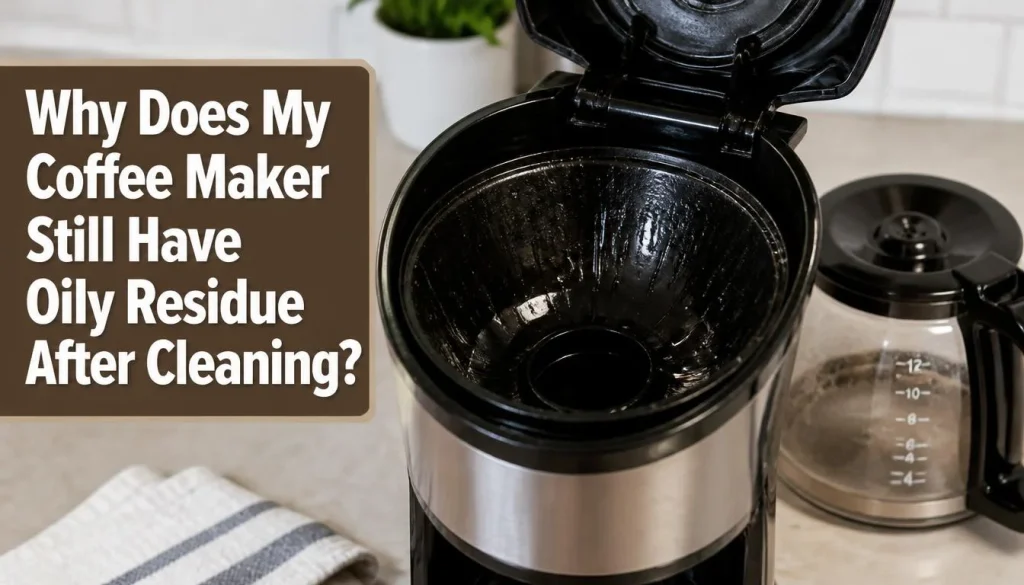
If you have washed the carafe and filter basket but still notice oily residue, there may be another part that needs attention.
The Carafe Lid or Filter Basket Was Missed
Oils can collect around the underside of the lid, the pouring spout, or the corners of the filter basket.
Remove and clean these parts separately if your model allows it.
The Reusable Filter Is Still Clogged
Fine coffee particles and oil can remain trapped in a mesh filter even after rinsing.
Use a soft brush and suitable cleaning method. If the mesh remains blocked or damaged, follow the manufacturer’s replacement guidance.
The Machine Needs Its Own Cleaning Cycle
If you have an automatic coffee maker or espresso machine, washing the visible parts may not clean its internal brew group.
Check whether your model requires a specific cleaning tablet or automated cycle.
You Used a Descaler Instead of a Coffee Cleaner
A descaling solution may remove mineral buildup without fully cleaning the oily residue on coffee-contact surfaces.
Use the cleaner intended for the affected part and complete any required rinse cycle.
The Residue Is Actually Natural Coffee Oil
A few oil droplets on freshly brewed coffee may come from the beans, rather than from dirty equipment.
If the removable parts are clean and the coffee tastes normal, those droplets alone do not prove that buildup remains inside the machine.
If the problem continues despite following the correct cleaning procedure, consult the manufacturer. Persistent leaks, strange noises, or abnormal water flow may indicate a separate fault.
How to Prevent Coffee Oil Buildup in a Coffee Maker

Preventing residue is usually easier than removing a thick, sticky layer later.
Clean the Brew Basket After Every Use
Empty the used grounds and rinse the basket before the residue dries.
If you use a reusable filter, clean it after brewing rather than leaving wet grounds inside it.
Wash the Carafe Regularly
Empty old coffee instead of leaving it in the carafe for long periods.
Wash the carafe and lid according to the manufacturer’s instructions. A quick rinse may not remove all the oils left behind by repeated brewing.
Clean the Internal Components on Schedule
If your machine has an automatic cleaning reminder, follow the instructions for the required cycle.
Use the correct product for the machine rather than waiting until there is a thick layer of residue.
Use a Simple Cleaning Schedule
Your exact schedule depends on the machine and how often you brew coffee, but this is a useful starting point.
| Frequency | What to do |
|---|---|
| After every brew | Remove used grounds or pods and rinse coffee-contact parts |
| Daily, when used | Wash the carafe and basket as directed; wipe up spills |
| Regularly, as directed | Clean the reservoir, lid, reusable filter, and other removable parts |
| When required | Run the approved internal coffee cleaning cycle |
| At the recommended interval | Descale the machine separately |
For a more detailed routine, see our guide on how often you should clean your coffee maker.
Follow the Manufacturer’s Instructions
Every coffee maker has its own cleaning requirements. A method that works for a simple drip machine may be unsuitable for an automatic espresso machine.
Check the manual before using a cleaning tablet, vinegar, baking soda, or a dishwasher. Proper cleaning helps avoid damage and makes it easier to maintain the machine over time.
Frequently Asked Questions About Coffee Oil Buildup in Coffee Maker
How Do You Remove Coffee Oil Buildup From a Coffee Maker?
Unplug the machine and allow it to cool. Wash the removable carafe, filter basket, lid, and reusable filter with warm water and mild dish soap if permitted. Use a soft brush for stubborn residue, then rinse thoroughly. For internal components, follow the manufacturer’s approved cleaning procedure.
Why Is There an Oily Film in My Coffee Pot?
Natural coffee oils can leave a greasy film on the inside of a carafe after repeated brewing. Dark-roast coffee may make the film more noticeable. Washing the carafe and lid regularly can help remove this residue.
Can Coffee Oil Buildup Make Coffee Taste Bitter?
Old coffee residue may contribute to an unpleasant or stale taste. However, bitterness can also result from over-extraction, grind size, or the type of coffee beans. Clean the machine first, then check your brewing method if the taste remains.
Does Vinegar Remove Coffee Oil Buildup?
Vinegar is not a universal solution for coffee oils. Some machines permit it for descaling, while others require a specific product. For removable parts, warm water and mild dish soap are usually a better starting point for oily residue.
Are Coffee Oil Remover Tablets the Same as Descaling Tablets?
No. Coffee oil remover tablets target coffee residue in compatible brewing components, while descaling products remove mineral deposits from the water system. Always choose the product recommended for your machine.
How Often Should I Clean Coffee Oil From My Coffee Maker?
Remove grounds or pods after every brew and wash the carafe, basket, and reusable filter regularly. Clean internal components at the intervals recommended for your model. Machines that brew frequently or have automatic espresso systems may need additional maintenance.
Can I Use Dish Soap Inside My Coffee Maker?
Mild dish soap is suitable for many removable parts, including a carafe and filter basket. Do not pour it into the reservoir or run it through the internal brewing system unless your manufacturer specifically instructs you to do so.
Why Does My Coffee Still Look Oily After Cleaning?
Freshly brewed coffee can naturally contain visible oil droplets, particularly when using dark-roast beans. This does not automatically indicate dirty equipment. If you still see a sticky film on the carafe or basket, inspect those parts and repeat the approved cleaning process if necessary.
Final Thoughts
Coffee oil buildup in a coffee maker is common, but it does not have to ruin your morning coffee. Regularly cleaning the carafe, filter basket, reusable filter, and other coffee-contact parts can prevent oily residue from collecting over time.
Start with warm water, mild dish soap, and a soft brush for suitable removable parts. If residue remains inside an automatic coffee maker or espresso machine, check whether a manufacturer-approved cleaning cycle or coffee oil remover is required.
Most importantly, remember that coffee oil cleaning and descaling are different tasks. Use the correct method for each problem, rinse thoroughly, and follow the instructions for your specific machine.
With a simple cleaning routine, you can reduce old coffee residue, maintain a fresher taste, and help your coffee maker stay in good working condition.

“I believe great cooking starts with the right tools, trusted advice, and a little confidence in the kitchen.”
Hi, I’m Emma Carter. My love for cooking began in my grandmother’s kitchen, where I learned that every great meal starts with simple ingredients and the right cookware. Over the years, I’ve spent countless hours researching, testing, and comparing kitchen appliances, cookware, coffee makers, air fryers, and other everyday kitchen essentials.
Here at KiCook, my goal is to make your buying decisions easier with honest product reviews, practical buying guides, and easy-to-follow cooking tips. Whether you’re upgrading your kitchen or searching for the best appliance for your home, I focus on providing clear, reliable, and research-backed information you can trust.
When I’m not testing new kitchen gadgets or writing in-depth guides, you’ll usually find me trying new recipes, visiting local farmers’ markets, or enjoying a quiet cup of coffee while planning my next kitchen project.