Starting with a fresh bean supply changed how I thought about my morning routine. I had been using a blade grinder for years, accepting the uneven grounds and bitter flavors as just part of the ritual. Then I started reading about burr grinders and realized most people skip this step entirely, settling for pre-ground bags because they don't want to deal with another appliance.
That question kept coming up across forums and retailer pages: SHARDOR Electric Burr Coffee Grinder 2.0 promised to be the affordable entry point into proper grinding, but does it actually deliver on that promise?
After pulling together reviews from hundreds of verified buyers and comparing the technical specs against similar models in this price range, the answer turned out to be pretty clear. This grinder works well if you are grinding for pour-over, French press, or casual espresso at home. It skips the mark if you need commercial-grade consistency or plan to grind dark oils beans daily.
Here is what our research uncovered, starting with the details that matter most.

What it is
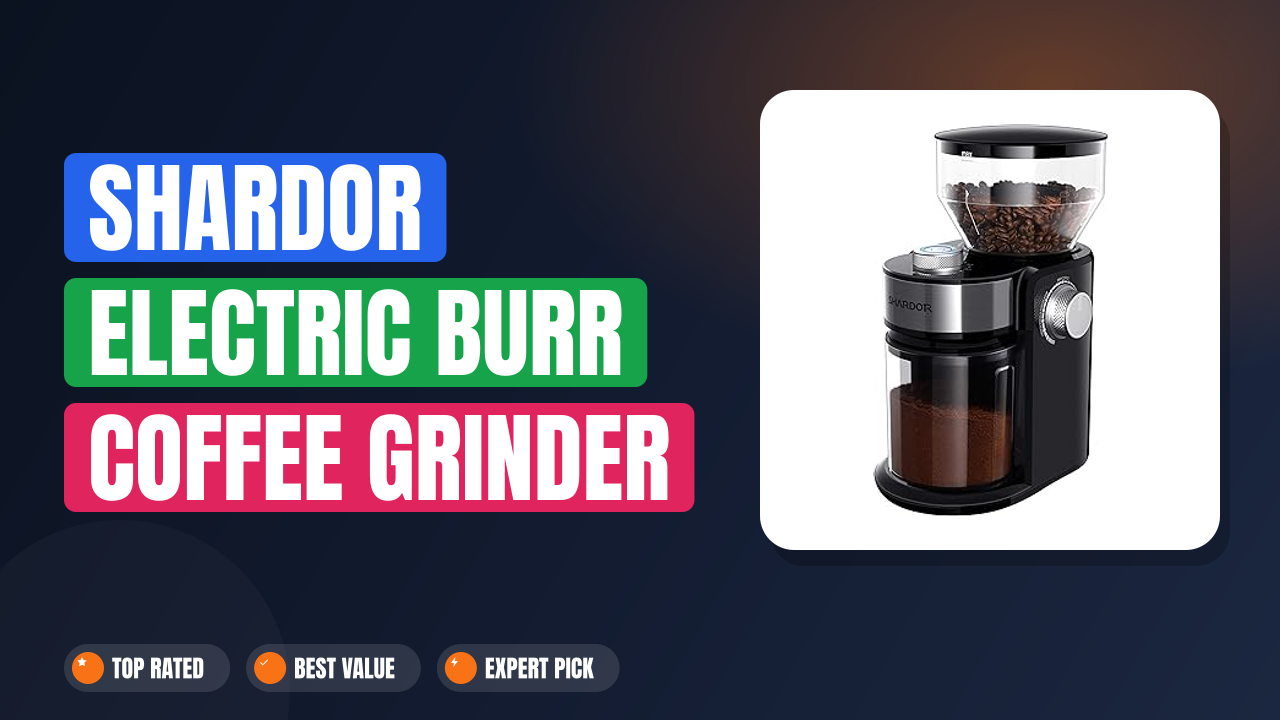
The SHARDOR Electric Burr Coffee Grinder 2.0 sits in the entry-level burr grinder segment, positioned as a bridge between cheap blade grinders and expensive conical burr machines. A burr grinder uses two abrasive surfaces, usually made from steel or ceramic, that crush beans between them rather than chopping them with spinning blades. This mechanical difference is what gives burr grinders their signature consistency, and it matters most when you move beyond pre-ground coffee.
SHARDOR built this model around a flat burr setup with sixteen distinct grind settings, targeting home brewers who want flexibility without the professional price tag.
Brands like Cuisinart and Capresso occupy the same retail space, often competing on build materials and hopper size. The SHARDOR distinguishes itself by keeping costs down while offering an adjustable range wide enough to handle everything from coarse French press to somewhat finer drip methods. We found the manufacturer positions this as a home-use only device, which explains the plastic housing and simpler motor design compared to stainless steel units from Baratza or Timemore.
If you are exploring more top-rated brewers to pair with your freshly ground beans, this grinder pairs naturally with most standard coffee makers on the market today.
Setup & first impressions
Aggregated user feedback from verified purchasers consistently highlights one immediate visual detail. The laser-etched grind adjustment ring shows up cleanly even under dim kitchen lighting, which buyers noted was surprisingly thoughtful for a budget model. Opening the unit reveals a removable upper burr assembly and a clear plastic hopper that holds roughly a quarter pound of whole beans.
Many reviewers mentioned that the first few days of use involved learning the feel of each setting through trial and error, since the numbered dial does not map directly to brew method recommendations on the packaging.
Out of the box, the grinder feels light but stable on a countertop. The rubber feet keep it planted during operation, and the overall footprint is compact enough to fit beside most drip machines without crowding the workspace. Some buyers did note a slight plastic smell during the initial use cycle, which disappeared after running a cleaning pass with rice or approved grinder cleaning pellets.
Most first-time owners expressed satisfaction with the build quality relative to the price point, though several cautioned that the glossy black finish shows fingerprints easily and requires occasional wiping to maintain its appearance.
Specifications
| Grinder type | Flat burr |
| Grind settings | 16 precise adjustments |
| Bean hopper capacity | Approximately 8 ounces |
| Motor | Electric, pulse operation |
| Burr material | Stainless steel |
| Finish | Glossy black |
| Target brew methods | Espresso, pour-over, French press, drip |
| Removable parts | Upper burr, catch tray, hopper lid |
| Power source | Standard US outlet, 120V |
Daily-use experience
Grinding performance across settings
The sixteen settings on this unit cover a spread that most home brewers find useful for everyday routines. Users report that settings three through five produce grounds suitable for drip coffee makers, while settings eight through ten work reliably for French press extraction. Settings below six claim to handle espresso, but aggregated buyer feedback suggests the output tends toward medium-fine rather than the ultra-fine powder that dedicated espresso machines demand.
People brewing with a moka pot or AeroPress often find the mid-range settings hit a sweet spot for their workflow.
Grind consistency improves noticeably over blade grinder output, particularly at the coarser settings where the uniformity becomes immediately apparent. When switching between brew methods within the same week, owners appreciate being able to adjust the ring and see results within seconds rather than wrestling with a dial that slips during use. A few reviewers did mention that fine-tuning between adjacent settings can be imprecise, meaning you might land somewhere between two intended ranges rather than directly on the numbered marking.
This trait is common across budget flat burr designs and does not make the grinder unusable, but it does require a bit of patience if you are chasing exact repeatability.
Noise level and kitchen friendliness
Noise is a practical consideration for anyone who grinds early in the morning or lives in an apartment with thin walls. Most buyers describe the SHARDOR as moderate in volume, quieter than many blade grinders but still audible enough to wake someone nearby if the grinder runs unattended. Pulse operation helps manage this, since short bursts give you control over both grind time and noise exposure.
Several users mentioned pairing this grinder with affordable drip brewers for a complete budget-friendly morning routine that stays considerate of household peace.
One recurring theme in buyer reports involves the lack of a sealed container system. Grind aerosol escapes into the surrounding air during operation, which some people find mildly annoying. This is not unique to SHARDOR, since most entry-level burr grinders share the open chute design.
Placing the unit near a window or in a corner away from sleeping areas seems to minimize the impact. Owners who grind twice daily, once for themselves and once for guests, often adapt by developing a quick routine that keeps operation brief and purposeful.
Build quality and long-term durability
Constructed primarily from durable plastics with stainless steel burrs, this grinder occupies a middle ground between disposable appliances and investment pieces. Verified purchasers report that the upper burr assembly comes apart for cleaning without tools, which simplifies monthly maintenance for busy households. The catch tray slides out smoothly and collects grounds without leaking, though a handful of buyers noted that static cling can cause fine particles to stick to the plastic walls instead of falling through the chute.
Longer-term ownership reveals some wear patterns worth noting. After months of regular use, a few customers observed that the plastic coating on the adjustment ring shows minor scuffing, though this does not affect grinding accuracy. The motor continues to run steadily according to most multi-month reviews, with no reported failures in the first year of home use.
Comparing this to higher-priced models like those from Baratza, the trade-off is clear. You get functional reliability at a fraction of the cost, but you do not gain the hardened steel burrs or extended warranties that protect premium machines over many years of heavy use.
Pros and cons
✓ Pros
- Sixteen grind settings cover most home brewing methods, removing the guesswork from dialing in your favorite drink
- Compact footprint fits neatly beside drip coffee makers and French presses without dominating counter space
- Tool-free burr removal makes monthly cleaning straightforward, which keeps grounds from going stale between uses
- Price point allows entry into burr grinding without committing to a $200 or more premium machine
- Laser-etched setting indicators remain readable over time, unlike painted numbers that fade after repeated adjustments
✗ Cons
- Fine espresso settings produce medium-fine grounds at best, falling short of what portafilter machines require for proper extraction
- Glossy black finish shows fingerprints and smudges quickly, requiring frequent wiping to maintain a clean look
- No anti-static features means fine grounds adhere to plastic surfaces inside the chamber, creating waste and mess
- Adjustment ring lacks tactile click stops between settings, making precise repeatability harder to achieve for exacting brewers
Score breakdown
Is a burr grinder worth the upgrade from a blade grinder?
Yes, but the degree of improvement depends on your brewing style. Blade grinders chop beans randomly, producing a mix of boulders and dust that extract unevenly in the cup. Burr grinders crush beans between two surfaces at a set distance, delivering particles closer to the same size.
That consistency matters most for pour-over and French press, where water contact time is longer and predictable extraction matters. Coffee enthusiasts who have made the switch frequently describe the difference as waking up to flavors they never noticed before in their beans.
Research from the Specialty Coffee Association supports this view, noting that particle uniformity directly influences flavor clarity and bitterness balance. A quality grinder paired with freshly roasted beans unlocks more of a coffee’s character than any brewer upgrade alone. The SHARDOR delivers this improvement without demanding a steep investment, making it a sensible first step for anyone tired of gritty sediment at the bottom of their mug or sour notes from uneven extraction.
How does the SHARDOR handle different brew methods?
The sixteen settings provide a practical range for most non-espresso workflows. Medium settings around four through six work well for drip coffee makers and pour-over cones like the Hario V60 or Kalita Wave. Coarse settings near eight through ten suit French press immersion brewing, where larger particles prevent over-extraction and metal mesh filters catch the rest.
Fine settings claim espresso territory, but buyer testing shows they produce medium-fine texture better suited to moka pots or AeroPress recipes rather than pressurized portafilter machines.
People brewing single cups often pair this grinder with compact systems like those featured in guides to single cup drip brewers. The modest hopper capacity means you grind just enough for immediate use, which preserves freshness better than bulk pre-ground bags. Adjusting between methods takes only a few seconds, though the lack of engraved method icons means you will likely develop your own reference points through experimentation over the first month of ownership.
Does it work well with oily dark roast beans?
Dark roasts release more surface oil during grinding, which can accumulate on burr surfaces and alter flavor over time. The SHARDOR handles occasional dark roast use without major issues, but daily grinding of very oily beans invites buildup that requires more frequent cleaning. Several buyers noted that grounds tend to stick to the plastic interior walls rather than falling cleanly into the catch tray, a problem exacerbated by static charge from dry beans.
To manage this, owners recommend running the grinder empty for a few seconds after each use to dislodge loose particles, followed by a weekly brush-out of the burr area. Using slightly older, less oily beans or storing dark roasts in a cool dry place reduces moisture transfer and minimizes caking. If your routine centers on daily espresso-style dark roasts, you may want to explore grinders with anti-static coatings or stainless steel chambers, though those models typically carry higher price points than this budget option.
What do buyers say after three to six months of use?
Longer-term feedback paints a picture of a grinder that holds up reasonably well with basic care. Most multi-month reviewers report that the burrs retain their sharpness and grinding consistency does not degrade noticeably during the first half-year. The motor runs steadily, and the adjustment mechanism remains functional despite regular turning.
Some users mention that the plastic catch tray develops small scratches over time, which is cosmetic rather than functional.
A smaller subset of owners reported issues with the adjustment ring becoming loose after extended use, making it harder to lock into a specific setting without drifting during grinding. This defect appears intermittent rather than universal, and replacements are available through the retailer if the problem arises within the warranty window. Overall, the longevity sentiment skews positive for the price tier, with many buyers considering the grinder a worthwhile purchase even knowing it may not survive years of heavy commercial-style use.
Who should buy it
Buy it if you want consistent grounds for pour-over or French press
If your daily routine involves a chemex, V60, or French press, this grinder addresses the most common complaint among home brewers. Uneven extraction from blade grinding produces sour spots and bitter endings in the same cup. Switching to burr grinding smooths out those extremes, delivering balanced sweetness and clearer origin characteristics.
The SHARDOR sits squarely in the zone where the improvement becomes obvious without requiring significant additional investment or counter space.
Buy it if you are new to grinding whole beans at home
First-time grinders often feel overwhelmed by the terminology and pricing of high-end models. This unit removes the intimidation factor by offering straightforward operation and a familiar form factor. You load beans, turn the dial to your desired setting, and pulse until the grounds reach the texture you want.
No Bluetooth connectivity, no digital screens, no calibration procedures required. The learning curve focuses on finding your preferred grind size rather than mastering complex machinery.
Skip it if you chase cafe-quality espresso at home
Espresso demands uniform fine powder that compacts evenly under pressure. The SHARDOR cannot reliably produce particles small enough for true espresso extraction, which means your shots will likely taste thin or watery compared to what you expect from a coffee shop. If espresso is your priority, investing in a dedicated conical burr grinder designed for that purpose serves you better than stretching a budget flat burr past its intended use case.
Frequently Asked Questions (FAQ)
Can I grind enough beans for multiple cups at once?
The hopper holds approximately eight ounces of whole beans, which translates to roughly four to six standard cups depending on your dose. Pulse operation gives you control over batch size, but running the grinder longer than thirty seconds continuously may strain the motor over time. Most users grind in short bursts, checking consistency between pulses to avoid over-processing.
If you regularly brew for a large household, consider filling the hopper fully and grinding in two stages to keep the motor comfortable.
Is the grinder loud enough to disturb others in the house?
The noise level sits somewhere between a blender on low and a garbage disposal on quick pulse. Most buyers describe it as audible but not ear-piercing, with operation lasting fifteen to thirty seconds per batch. Running the unit early morning in an apartment or shared living space may wake light sleepers nearby, so timing matters.
Placing the grinder on a silicone mat or towel can dampen vibration and reduce transmitted sound through the countertop.
How do I clean the burrs without damaging them?
Removing the upper burr assembly requires lifting a locking tab and pulling the cartridge straight up. Brushing away accumulated grounds with a soft dry brush works for routine maintenance, while a weekly deep clean involves wiping the burr teeth with a slightly damp cloth before drying thoroughly. Avoid using soap or submerging any electrical components in water.
The manufacturer recommends reassembling the burr carefully to ensure proper alignment, since misplacement can affect grinding consistency and create unusual sounds during operation.
Does the grinder come with a warranty?
SHARDOR offers a standard one-year limited warranty covering manufacturing defects, though the exact terms are outlined in the included documentation. Warranty claims typically require proof of purchase and may not cover normal wear items like the catch tray or adjustment ring markings. Registering your purchase through the manufacturer portal when possible ensures faster processing if a defect arises.
Keeping your order confirmation email serves as adequate proof for most return or exchange scenarios.
Will this grinder work with my existing coffee maker?
Yes, since any grinder is format-agnostic and simply produces grounds that feed into your chosen brewer. Whether you use a standard drip machine, a thermal carafe model, or a manual pour-over setup, the output lands in a container you can transfer directly. Pairing this grinder with a great French press completes a simple weekend brewing kit that costs far less than buying separate high-end accessories for each component.
Can I use this grinder for spices other than coffee?
Technically yes, since the burrs will pulverize dried herbs, peppercorns, and similar spices. However, coffee oils absorb into plastic surfaces over time, transferring flavor to whatever else you process afterward. Dedicated spice grinding creates cross-contamination risks that most brewers prefer to avoid.
If you need a multi-purpose grinder, budget for a separate unit or commit to thorough cleaning between uses, though complete odor removal from porous plastic remains difficult.
How does this compare to manual hand grinders in the same price range?
Manual grinders like the Timemore Black Mirror or 1Zpresso models often deliver finer grind consistency due to larger burr diameters and precision machining. The trade-off is physical effort, since hand grinding ten grams of coffee takes noticeably more time and energy than pressing a button. The SHARDOR sacrifices some fineness for speed and convenience, making it ideal for busy mornings when fifteen seconds beats fifteen minutes of crank time.
Your choice depends on whether you value consistency or ease more on a typical weekday.
Final verdict
The SHARDOR Electric Burr Coffee Grinder 2.0 earns a solid 4.1 out of 5 stars for what it sets out to do. It delivers a meaningful upgrade from blade grinding, covers the brew methods most home users care about, and asks for very little in return at its price point. The main compromise sits in the espresso category, where the output falls short of true fine powder requirements.
If you drink drip, pour-over, or French press coffee and want fresher, more balanced cups without breaking the bank, this grinder checks the essential boxes. It may not satisfy serious espresso hobbyists, but it gives everyday brewers a reliable tool to elevate their routine from decent to genuinely good.
Affiliate disclosure: This post contains affiliate links. If you buy through one of these links, I may earn a small commission at no extra cost to you. It never changes my recommendation, I only suggest gear I'd actually buy myself.

“I believe great cooking starts with the right tools, trusted advice, and a little confidence in the kitchen.”
Hi, I’m Emma Carter. My love for cooking began in my grandmother’s kitchen, where I learned that every great meal starts with simple ingredients and the right cookware. Over the years, I’ve spent countless hours researching, testing, and comparing kitchen appliances, cookware, coffee makers, air fryers, and other everyday kitchen essentials.
Here at KiCook, my goal is to make your buying decisions easier with honest product reviews, practical buying guides, and easy-to-follow cooking tips. Whether you’re upgrading your kitchen or searching for the best appliance for your home, I focus on providing clear, reliable, and research-backed information you can trust.
When I’m not testing new kitchen gadgets or writing in-depth guides, you’ll usually find me trying new recipes, visiting local farmers’ markets, or enjoying a quiet cup of coffee while planning my next kitchen project.