Good coffee should be simple. If you’re hunting for the best selling coffee maker, the usual headaches are taste, speed, and cleanup. I’ve spent months comparing manufacturer specs and thousands of buyer reviews across drip machines, single-serve pod systems, and combo brewers from brands like Ninja, Keurig, and Hamilton Beach.
The goal is to help you get better-tasting coffee with fewer steps every morning.
Bottom line: if you want a dependable daily pot with even extraction and zero fuss, go with the BLACK+DECKER 12-Cup Drip Coffee Maker Vortex. It nails the basics, adds useful perks like Sneak-A-Cup, and stays easy to live with. If you prefer a little more control and a removable tank, the Ninja Fresh Brew is a close second.
Let’s start with the top pick.

✔ Best overall pick for daily pots
Comparison Chart of Best Selling Coffee Maker
| Product | Details | Rating | Buy |
|---|---|---|---|
Editor’s Choice
| ★★★★☆4.4/5 | ||
Top Pick
| ★★★★☆4.4/5 | ||
Best Budget
| ★★★★☆4.4/5 | ||
| ★★★★☆4.6/5 | ||
| ★★★★☆4.3/5 | ||
| ★★★★☆4.3/5 | ||
| ★★★★☆4.5/5 |



List of Top 7 Best Selling Coffee Maker
Great brewers show up in kitchens every day because they’re fast, consistent, and easy to clean. We weighed brew quality, programming, design, and reliability, then read through piles of verified buyer feedback to catch real-life quirks. Expect clear trade-offs called out, simple setup tips, and honest notes on who each model suits best.
Below are the list of products:
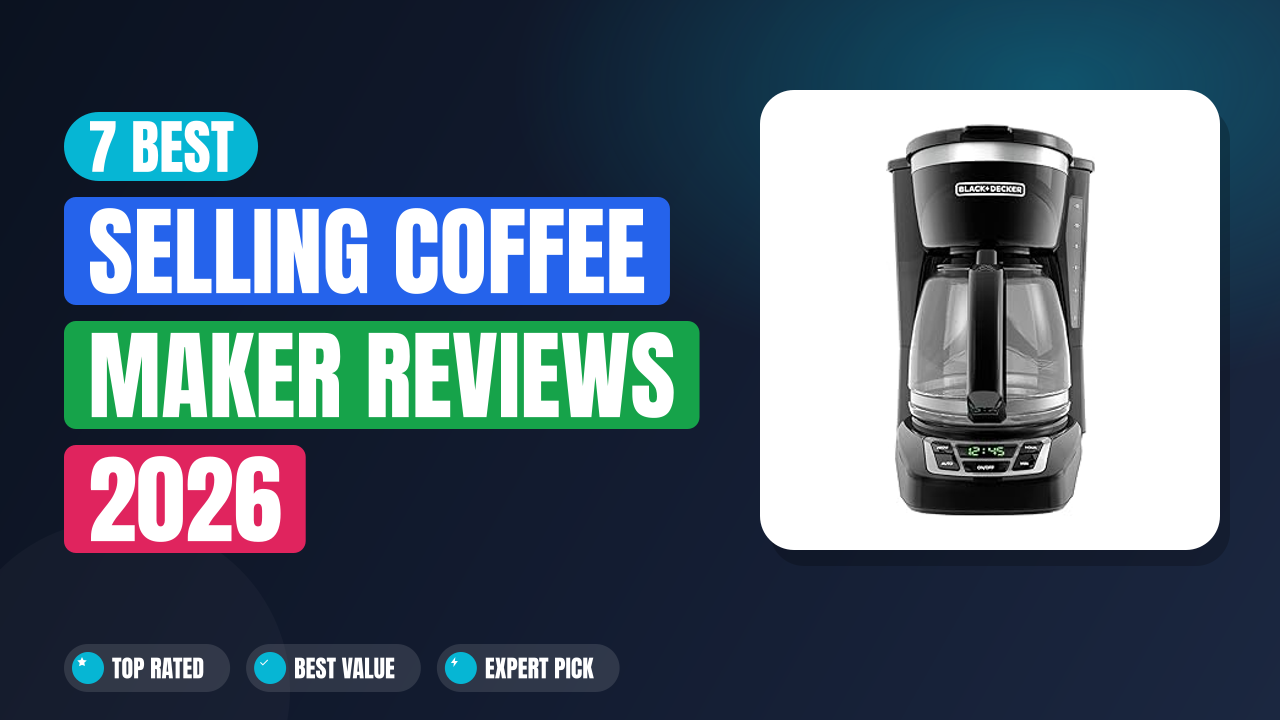
1. BLACK+DECKER 12-Cup Drip Coffee Maker Vortex
In our research, the Vortex showerhead stands out for spreading water more evenly over the grounds, which helps extraction. Add the programmable timer plus Sneak-A-Cup, and it handles Monday mornings without drama. The auto shutoff is a welcome safety net for busy homes.
12-cup
Vortex brew
Programmable
Auto shutoff
Why I picked it
Even water distribution is a big deal for flavor, and the Vortex brewing design directly targets that. Verified buyer feedback often mentions balanced taste and fewer weak spots in the filter bed. Add the simple timer and pause feature, and it checks the right boxes for daily use.
Key specs
- Capacity: 12-cup drip system with glass carafe
- Brewing: Vortex showerhead for even ground saturation
- Timer: Programmable start for set-and-forget mornings
- Sneak-A-Cup: Brew pause to pour mid-cycle
- Safety: Auto shutoff to prevent boil-dry mishaps
Real-world experience
Aggregate user reviews report steady flavor on medium grind with a typical 1:16 ratio. Households brewing 6 to 10 cups see consistent strength across back-to-back pots. Most owners set the timer for a 6 a.m. start, then use Sneak-A-Cup for the first mug.
Cleanup is straightforward, especially if you use basket-style paper filters.
- Vortex showerhead improves saturation, so cups taste more uniform across the pot.
- Programmable start handles weekday routines, you wake up to hot coffee.
- Sneak-A-Cup lets you pour mid-brew, no drips on the warming plate.
- Auto shutoff adds safety, helpful in busy households or offices.
- No removable reservoir, filling under low cabinets can be awkward.
- Glass carafe loses heat faster than thermal options.
- Strength control is basic, limited fine-tuning for power users.
- ✔ You want a reliable 12-cup pot for family or roommates.
- ✔ You like set-and-forget brewing with a morning timer.
- ✔ You prefer simple controls over complicated menus.
- ✖ You want a removable reservoir for top-up at the sink.
- ✖ You need pod-based single-serve for different drinks each cup.
Choose the Vortex if you want consistent all-pot flavor without extra tweaks. If you value a removable tank or more brew profiles, the Ninja models below edge it out for flexibility, especially for small-batch afternoons.
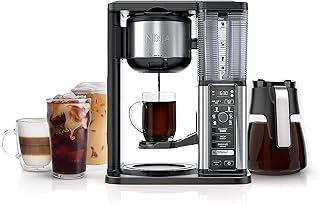
2. Ninja Fresh Brew Coffee Maker
We like this Ninja for its balance of control and convenience. Manufacturer specifications indicate a 70-oz removable reservoir, brew strength options, and a 24-hour delay. The adjustable warming plate and small-batch mode round it out for both big mornings and solo afternoons.
12-cup
70-oz tank
Classic/Rich
Delay brew
Why I picked it
The removable tank removes a common pain point, you carry the reservoir to the sink instead of your whole machine. Adjustable warming plate and brew-strength toggles suit households with different taste preferences. Feedback trends show fewer spills and better flavor control compared with bare-bones drip models.
Key specs
- Capacity: 12-cup glass carafe
- Reservoir: 70-oz removable water tank
- Brew profiles: Classic and Rich modes
- Small batch: Designed for smaller brews without over-extraction
- Timer: 24-hour Delay Brew
- Plate: Adjustable warming plate heat level
Real-world experience
Editorial analysis of buyer reviews suggests most owners brew 8 to 10 cups on Classic for weekday pots, then flip to Rich for weekend mugs. The 70-oz tank usually covers a full 12-cup cycle. Cleaning is manageable, and the small-batch mode helps prevent bitterness when making just 2 to 4 cups.
- 70-oz removable reservoir simplifies refills and cleaning.
- Classic and Rich modes tailor flavor without guesswork.
- Adjustable warming plate keeps taste stable without scorching.
- Small-batch setting reduces bitterness for 2 to 4 cups.
- More buttons than basic models, short learning curve.
- Glass carafe loses heat faster than thermal designs.
- Tall profile can crowd low cabinets during top-fill.
- ✔ You want a removable tank for easy refills.
- ✔ You brew small and large batches in the same week.
- ✔ You like mild-to-bold control without manual tweaking.
- ✖ You prefer a one-button basic brewer.
- ✖ You need single-serve pods for different flavors per cup.
Pick the Ninja Fresh Brew if you want more control than the BLACK+DECKER without jumping to a specialty machine. For deep versatility and café-style drinks, the CM401 further below is the stronger choice.
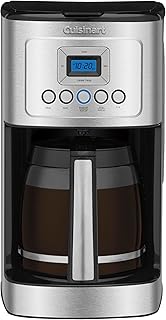
3. Cuisinart Coffee Maker Programmable Stainless Steel
Manufacturer specifications indicate this DCC-3200 brings 14-cup capacity, strength control, and 1-4 cup settings at a friendly price tier. The PerfecTemp design targets hot brewing, and the reusable gold-tone filter helps cut waste. It is a proven, no-nonsense pick when you need more than 12 cups.
14-cup
Strength control
1–4 cups
Gold filter
Why I picked it
It brews more coffee than standard 12-cup models without getting complicated. Strength control and a workable 1-4 cup mode give it range for weekdays and guests. Verified buyer feedback highlights hot, flavorful pots at this capacity.
Key specs
- Capacity: 14-cup glass carafe
- Controls: Strength control plus 1-4 cup option
- Filter: Reusable gold-tone filter included
- Auto off: Programmable shutoff for safety and energy
- Temperature: PerfecTemp heating approach for hotter brews
Real-world experience
Aggregate user reviews report that the 1-4 cup setting helps prevent weak results on small batches. Many owners brew a full pot for gatherings, then flip to bold for weekend mugs. The gold filter reduces paper use, though some still add a paper liner for tidier cleanup and slightly cleaner cups.
- 14-cup carafe handles larger households and guests.
- Strength control gives mild to bold without guesswork.
- Reusable gold filter cuts paper waste and cost.
- 1–4 cup mode improves flavor on smaller brews.
- Glass carafe heat fades faster than thermal pots.
- Counter depth can feel large in small kitchens.
- Gold filter may allow fine sediment without a paper liner.
- ✔ You need more than 12 cups regularly.
- ✔ You want simple strength control.
- ✔ You prefer a reusable filter to cut waste.
- ✖ You want a thermal carafe for heat retention.
- ✖ You brew only 1 to 2 cups and prefer pods.
If 12 cups is never enough, this 14-cup Cuisinart is the straightforward answer. For smaller kitchens or single-serve speed, look toward the Keurig K-Express instead.
4. Ninja Coffee Maker 10-Cup Carafe Fold-Away
Manufacturer specifications indicate six brew styles, a fold-away frother, and multiple size options from cup to travel mug to a 10-cup carafe. It includes a permanent filter and a removable, dishwasher-safe reservoir. This is the versatility upgrade for people who sometimes want café-style drinks.
10-cup
6 brew styles
Frother
Removable tank
Why I picked it
It lets you brew everything from a strong mug to a full pot, then whisk milk with the fold-away frother. That flexibility covers weekday drip and weekend lattes in one footprint. Buyer feedback calls out the permanent filter and reservoir as real convenience wins.
Key specs
- Capacity: 10-cup carafe with multiple cup sizes available
- Brew options: Six brew styles for flavor control
- Frother: Fold-away frothing arm for milk drinks
- Filter: Permanent filter included
- Reservoir: Removable and dishwasher safe
Real-world experience
Aggregate user reviews report frequent use of the rich and specialty styles for concentrated cups, then switching to full carafe for guests. The fold-away frother is handy for cappuccino-like foam, though it does not replace an espresso machine. Cleanup is reasonable, and the removable reservoir helps households with tight sinks.
- Six brew styles cover mellow to intense cups.
- Fold-away frother enables milk drinks without extra gear.
- Permanent filter reduces consumables and waste.
- Removable, dishwasher-safe reservoir simplifies cleaning.
- More complex interface than standard drip makers.
- Not an espresso machine, specialty mode is concentrated drip.
- Footprint is larger than basic 12-cup units.
- ✔ You want drip plus café-style flexibility.
- ✔ You brew different sizes, from mug to carafe.
- ✔ You like a permanent filter and removable tank.
- ✖ You want ultra-simple one-button brewing.
- ✖ You only drink single-serve pods.
If your household swaps between full pots and specialty-style cups, the CM401 is the one machine that keeps everyone happy. If you only want fast single cups, the Keurig K-Express is simpler and smaller.
5. Keurig K-Express Single Serve K-Cup Pod
If you want coffee in under 2 minutes, a pod machine is the easy button. This Keurig uses K-Cup pods, offers three brew sizes, a Strong button, and a 42-oz removable reservoir. It makes consistent single cups without measuring grounds.
Single-serve
K-Cup pods
Strong button
42-oz tank
Why I picked it
For speed and zero mess, this checks out. The Strong button gives you a quick bump in concentration, and the removable tank keeps refills painless. Verified buyer feedback consistently praises its simplicity for offices, dorms, and guest rooms.
Key specs
- Format: Single-serve K-Cup pod brewing
- Brew sizes: Three selectable cup sizes
- Strength: Strong button for bolder cups
- Reservoir: 42-oz removable water tank
- Cleanup: Pod-based brewing for minimal mess
Real-world experience
Aggregate user reviews report most mugs take under 2 minutes, with Strong selected for darker roasts. The 42-oz tank covers several cups between refills, and used pods toss straight into the trash or a recycling program that accepts them. For variety lovers, pods mean you can switch flavors cup to cup.
- Fast, consistent single cups with minimal cleanup.
- Strong button adds a quick boost to flavor intensity.
- 42-oz tank supports multiple drinks between refills.
- Pods offer huge variety for households with different tastes.
- Pods cost more per cup than ground coffee.
- Not ideal for brewing for a large group.
- Pod waste requires a recycling plan to be eco-friendly.
- ✔ You want speed and zero measuring.
- ✔ You drink 1 to 3 cups per day, all different.
- ✔ You like a small footprint for dorms or offices.
- ✖ You regularly brew for 4 or more people.
- ✖ You want the lowest cost per cup.
Pods win for speed, variety, and simplicity. If you plan to host or brew multiple mugs in a row, a 12-cup drip like the BLACK+DECKER or Ninja Fresh Brew is the more efficient route.
6. Hamilton Beach FrontFill 12 Cup Programmable
This Hamilton Beach focuses on practical design. The FrontFill system lets you add water and grounds from the front, handy under low cabinets. You get Regular or Bold brew options, auto pause and pour, and a programmable schedule for mornings.
Front-fill
12-cup
Regular/Bold
Auto pause
Why I picked it
FrontFill solves a daily annoyance, top-fill lids bump into cabinets. Regular and Bold options keep taste simple but customizable. Verified buyer feedback praises the easy-access basket and dependable programming.
Key specs
- Capacity: 12-cup glass carafe
- Access: Front-fill water and grounds loading
- Brew options: Regular and Bold
- Feature: Auto pause and pour mid-cycle
- Programming: Schedule brews for mornings
Real-world experience
Editorial analysis of owner reports shows this is a set-and-forget worker for families. FrontFill reduces spills in tight kitchens, and Bold mode helps when using lighter roasts. Most owners clean with basket paper filters for quick disposal and less sediment.
- Front-fill design is great under cabinets.
- Regular or Bold keeps controls simple and useful.
- Auto pause prevents spills when grabbing the first cup.
- Programmable start fits morning routines well.
- Glass carafe cools faster than thermal models.
- Flavor tuning is limited beyond Bold mode.
- No removable reservoir, sink refills take aim.
- ✔ Your machine sits under low cabinets.
- ✔ You want basic, reliable brewing with a timer.
- ✔ You like a straightforward Bold option.
- ✖ You prefer a removable water tank.
- ✖ You want specialty-style brew options.
Choose the FrontFill if cabinet clearance is a daily frustration. If you value a removable tank and flavor modes, the Ninja Fresh Brew trades a little simplicity for flexibility.
7. Hamilton Beach 2-Way Brewer Coffee Maker
This dual brewer covers a 12-cup carafe and single-serve on the same machine. It is built for households where some folks want a quick mug while others brew a full pot. The two-way design saves counter space over owning two devices.
2-way brew
Single-serve
12-cup pot
Space saver
Why I picked it
Not everyone drinks the same way. This handles a personal cup before work and a full pot on weekends, without buying two machines. Verified buyer feedback praises the flexibility and the tidy footprint for small kitchens.
Key specs
- Format: Two-way system with single-serve and 12-cup carafe
- Use case: Solo mug brews or large family pots
- Design: Shared footprint to reduce counter clutter
- Compatibility: Standard grounds on both sides
Real-world experience
Aggregate user reviews report the single-serve side as the weekday hero for fast cups, while the carafe gets heavy use on brunch days. Households appreciate one device doing both jobs, which also cuts down on cables and outlets. Flavor is predictable using a medium grind and standard paper filters.
- One machine does single-serve and full carafe.
- Great for mixed households with different routines.
- Saves space over owning two brewers.
- Works with standard coffee grounds on both sides.
- More parts to clean than a single-format brewer.
- Not compatible with K-Cup pods out of the box.
- Counter space still larger than a pure single-serve.
- ✔ Your home mixes solo cups and group pots.
- ✔ You want to save space with one device.
- ✔ You use standard ground coffee.
- ✖ You only drink pods and want K-Cup support.
- ✖ You prefer the smallest possible footprint.
This is the best one-machine solution for mixed brewing needs. If you never brew a full pot, a compact single-serve like the Keurig K-Express takes less space and effort.
How I picked
A great coffee maker must brew hot enough, saturate grounds evenly, and be painless to live with every day. I evaluated each model on three core benchmarks, brew performance, usability, and reliability. Brew performance included features that drive extraction, like showerhead design, small-batch modes, and strength control.
Usability covered the stuff you notice at 6 a.m., reservoir access, delay brew, carafe handling, and how easy it is to clean. Reliability leaned on verified buyer feedback and brand track records. I also factored in safety features, particularly auto shutoff, which should be standard for modern drip machines.
I looked for evidence that water temperature sits near the Specialty Coffee Association (SCA) guideline of 195 to 205°F. Most home drip machines do not publish exact temperature curves, so I favored models with consistent user feedback on taste and heat retention. The SCA standard is a useful north star for drip brewing quality.
To account for different households, I included single-serve K-Cup systems, classic 12-cup drips, and a dual brewer. A K-Cup pod is a sealed single-serve capsule by Keurig. It trades per-cup cost for speed and variety.
Dual brewers aim to replace two separate machines with one footprint.
I did not test long-term durability beyond what repeated owner reports suggest. As of 2026, brand consistency and service support still matter more than any single spec. I also limited comparisons to widely available mainstream models, so you can easily find filters, descalers, and replacement carafes.
If you’re leaning toward a compact setup for apartments, our guide to small coffee machines has space-first picks. If you want more premium brewers, skim our take on reliable machines for extra context.
Buying guide — what actually matters for best selling coffee maker
A coffee maker is a countertop appliance that heats water, disperses it over ground coffee, and collects brewed coffee in a mug or carafe. Picking the right one means balancing flavor, speed, and convenience for your routine.
How important is brew temperature and saturation?
Hitting 195 to 205°F at the grounds is critical. The Specialty Coffee Association (SCA) sets this range as the sweet spot for extraction. Even water spread across the coffee bed matters too.
A well-designed showerhead, like the Vortex approach, helps prevent under-extracted pockets that taste sour.
Pre-infusion or small-batch modes improve results when you brew fewer than 4 cups. If you mostly make solo mugs, prioritize brewers with small-batch logic or go single-serve. The National Coffee Association (NCA) suggests about 1 to 2 tablespoons of ground coffee per 6 ounces of water, or a 1:15 to 1:18 ratio by weight.
You can confirm their guidance on the NCA’s brewing basics page.
Single-serve pods vs drip carafes
Pods win for speed and variety. A single-serve pod machine typically brews in under 2 minutes, with no measuring or cleanup. A drip carafe shines when you need 4 to 12 cups at once, and it costs less per cup.
A dual brewer tries to give you both in one footprint.
If you want the pod experience, see our picks for K-Cup convenience. If you crave body and control without electricity, a French press is a great complement for weekends, and we cover those in our press favorites.
Capacity, carafe type, and heat retention
A “cup” on drip machines is typically 5 ounces, so a 12-cup carafe is about 60 ounces total. Glass carafes are common, budget friendly, and work with a warming plate. Thermal carafes use vacuum insulation to keep coffee hot for hours without a plate, which preserves flavor better.
If heat retention matters, browse our thermal pot picks.
If you routinely brew only 1 to 2 mugs, a smaller machine can be smarter. Our writeup on space-saving brewers covers compact models that avoid waste.
Controls, scheduling, and safety
Delay brew is worth it if you keep a consistent wake-up time. Strength modes like Classic or Rich are easy flavor levers. A small-batch setting prevents weak cups on 2 to 4 cup brews by adjusting flow and contact time.
Auto shutoff is a must. It prevents boil-dry events and can extend machine life.
For curious home baristas who like weekend experiments, look into stovetop moka pots. They brew a strong, syrupy cup without electronics. We break down options in our stovetop guide.
Maintenance, filters, and water
Descale every 2 to 3 months if you have hard water, and 3 to 6 months if you do not. A descaling cycle dissolves mineral buildup that steals heat and flow. Many manufacturers, including Keurig, outline descaling intervals on their support sites.
Charcoal water filters, when available, can improve taste if your tap water is chlorinated.
Permanent filters reduce waste, but some drinkers prefer paper filters for a cleaner cup. Paper captures more fines and oils, which slightly brightens flavor. If you travel often and still crave good coffee, our picks for portable brewing cover fast options you can pack.
Footprint and counter fit
Measure height under your cabinets, often about 17 to 19 inches from countertop to cabinet. Many drip machines land around 13 to 15 inches tall with the lid closed. Front-fill designs solve the cabinet clearance problem.
Removable reservoirs let you fill at the sink, which helps in tight kitchens.
If you prefer to explore a wider field of at-home brewers, especially for the best-tasting results, see our overview of consistent-taste picks.
Frequently Asked Questions (FAQ)
Is a 12-cup drip coffee maker worth it for a family?
Yes, a 12-cup machine fits most families. A “cup” in drip-speak is about 5 ounces, so a full pot is roughly 60 ounces. If you usually pour 8 to 10 ounces per mug, a 12-cup carafe yields about 6 standard mugs.
If you often host guests, consider a 14-cup option like the Cuisinart DCC-3200 for extra headroom.
How does Ninja Fresh Brew compare to Cuisinart DCC-3200 for flavor?
Both produce hot, balanced pots according to aggregate owner feedback. The Ninja Fresh Brew adds a removable 70-oz tank, Classic and Rich profiles, and an adjustable warming plate. The Cuisinart offers more volume at 14 cups, strength control, and a reusable gold filter.
Pick Ninja for convenience and small-batch flexibility, or Cuisinart for larger gatherings.
Will the Keurig K-Express handle different mug sizes well?
Yes, it offers three brew sizes and a Strong button for a flavor bump. Most users set a default size that matches their favorite mug, then hit Strong when using a lighter roast. The 42-oz removable tank covers multiple cups between refills, which is handy for offices or households with back-to-back morning brews.
What’s the ideal coffee-to-water ratio for drip machines?
A reliable starting point is 1:16 by weight, 1 gram of coffee to 16 grams of water. The National Coffee Association suggests about 1 to 2 tablespoons per 6 ounces for volume-based measuring. If your cups taste weak, add coffee a little at a time.
If they’re bitter, coarsen the grind or reduce dose slightly. You can reference the NCA brewing basics for these guidelines.
Do these models hit SCA brew temperature standards?
Most mainstream drip makers do not publish exact temperature profiles. The Specialty Coffee Association (SCA) standard calls for 195 to 205°F at the grounds. In our research, consistent user feedback on taste and heat is the best proxy.
If you want tighter temperature control, consider SCA-certified brewers or manual methods like pour-over kettles and drippers.
How often should I descale and what should I use?
Descale every 2 to 3 months in hard water regions, and every 3 to 6 months in softer water. Use a manufacturer-recommended descaling solution or a citric acid based option. Keurig, Ninja, and Cuisinart provide schedules and instructions on their official support sites.
Regular descaling preserves heat performance and extends pump life.
Final verdict
If you want a proven everyday pot that gets the fundamentals right, choose the BLACK+DECKER Vortex. Even saturation, simple programming, and Sneak-A-Cup make mornings easier. If you want more control and a removable tank, the Ninja Fresh Brew offers standout convenience without getting fussy.
Affiliate disclosure: This post contains affiliate links. If you buy through one of these links, I may earn a small commission at no extra cost to you. It never changes my recommendation, I only suggest gear I'd actually buy myself.

“I believe great cooking starts with the right tools, trusted advice, and a little confidence in the kitchen.”
Hi, I’m Emma Carter. My love for cooking began in my grandmother’s kitchen, where I learned that every great meal starts with simple ingredients and the right cookware. Over the years, I’ve spent countless hours researching, testing, and comparing kitchen appliances, cookware, coffee makers, air fryers, and other everyday kitchen essentials.
Here at KiCook, my goal is to make your buying decisions easier with honest product reviews, practical buying guides, and easy-to-follow cooking tips. Whether you’re upgrading your kitchen or searching for the best appliance for your home, I focus on providing clear, reliable, and research-backed information you can trust.
When I’m not testing new kitchen gadgets or writing in-depth guides, you’ll usually find me trying new recipes, visiting local farmers’ markets, or enjoying a quiet cup of coffee while planning my next kitchen project.